At Universal Window, we believe that the best measure of our craftsmanship is the lasting impact we leave on every property. Our case studies offer a detailed look at how we solve complex architectural challenges, improve energy efficiency, and elevate the aesthetic value of diverse buildings.
Explore our recent projects to see how we combine innovative design with high-performance engineering to deliver solutions that are as functional as they are beautiful.
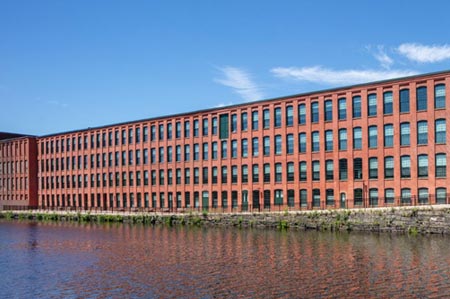
Developer WinnCompanies sought to transform three of the nine industrial buildings within the former Farr Alpaca Company Mill complex into 88 affordable apartment homes for seniors aged 55 and older. Considered one of Holyoke’s most prominent historic properties, the complex represents a fundamental chapter in the city’s industrial and cultural heritage.
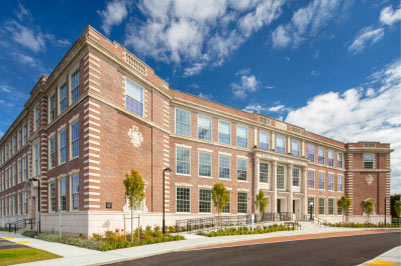
Multifamily housing developer Beacon Communities and Harborlight Homes, a non-profit focused on creating access to affordable housing, came up with the idea to transform the former Briscoe School into an income-restricted senior living community with a unique feature ─ six of the 91 apartments would be reserved for live/work spaces for local artists.
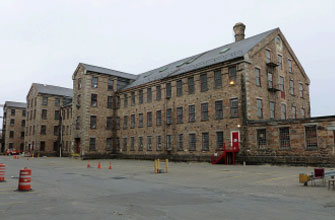
Developer WinnCompanies sought to transform Stone Mill, originally constructed in 1845, into a 21st-century model of energy-efficient adaptive reuse, creating 86 mixed-income apartments. The goal was to develop one of the first fossil-fuel-free, all-electric apartment communities in the state, one that would consume 40% less energy and emit 30% fewer greenhouse gases than a typical gas-fired multifamily building.
THE PRYDE, HYDE PARK, MA – Pennrose, LGBTQ Senior Housing, Inc., and the City of Boston Mayor’s Office of Housing set out to create New England’s first LGBTQ-affirming, incomerestricted housing community for seniors. Dubbed The Pryde, the project would transform the former Barton Rogers School in Hyde Park, originally constructed in 1899, into 74 affordable apartments. Click here to read the fully case study.
BOSTON VOLVO VILLAGE, ALLSTON, MA – Boston Volvo Village set out to transform the former New England regional headquarters for International Harvester, a five-story, 71,000-square-foot historic Beaux-Arts building constructed in 1925, into a modern urban car dealership and offices. Click here to read the fully case study.
MYSTIC WATER WORKS, SOMERVILLE, MA – The Mystic Water Works, also known as the Mystic Pumping Station, was constructed between 1862 and 1865 by the City of Charlestown and served as part of the regional water supply infrastructure until the early 1900s. Click here to read the fully case study.
DAN RIVER FALLS, DANVILLE, VA – Built in 1920, the former White Mill is an iconic fivestory, 550,000-square-foot reinforced concrete, simplified Gothic Revival-style building that stands as the lone survivor of Danville’s first industrial center for textile manufacturing. Click here to read the full case study.